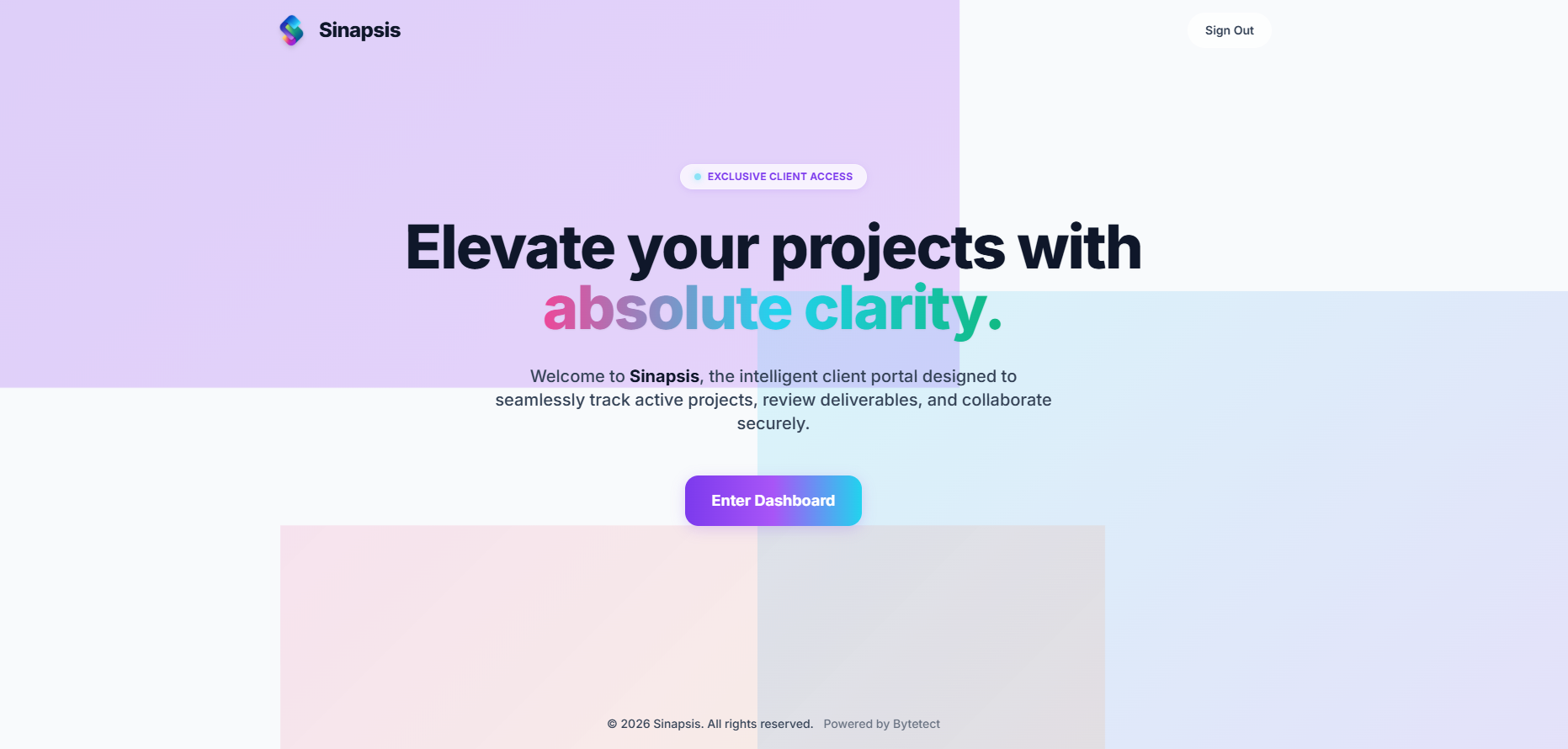
At ByteTect, our core mission is engineering the digital infrastructure that turns unstructured chaos into decision-grade intelligence. But one of the most critical challenges we see in software engineering isn’t just technical—it’s organizational. In fact, many teams still rely on traditional development methods that treat projects like a black box. Specifically, requirements go in at the beginning, and then weeks or months later the software emerges. However, this approach creates significant problems for clients because they often see little visibility into the team’s progress, emerging bottlenecks, or the key architectural decisions the team makes along the way. As a result, stakeholders frequently feel disconnected from the process and uncertain whether the team is truly addressing their actual needs. That why we built a project management platform Sinapsis.
We built Sinapsis (NextGPM) to solve this. Sinapsis is a project management platform that we engineered from the ground up to connect clients directly with every stage of their project’s development lifecycle. By doing so, it delivers unprecedented transparency, alignment, and collaboration throughout the entire process. Since launch it has also grown an AI-native interface: Sinapsis now speaks MCP, so teams and clients can drive their boards from a Claude conversation.
Here is an architectural deep-dive into what powers Sinapsis and how it aligns with our vision of transparent, intelligent infrastructure.
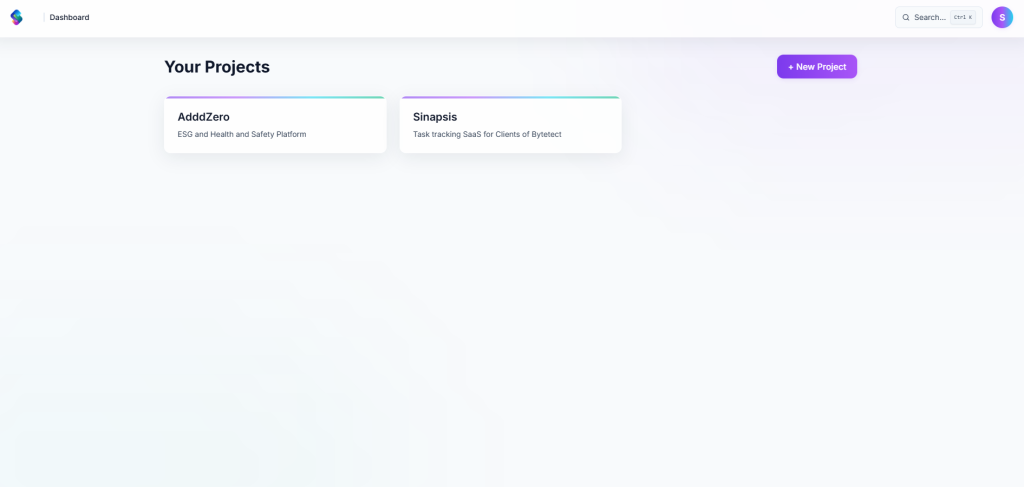
The Problem: The Engineering Black Box
Modern engineering teams use a fragmented array of tools: ticket trackers, code repositories, documentation wikis, and chat apps. For developers, this causes friction. Additionally, for clients, this approach creates a “black box” effect. In particular, requirements go in at the start, and then weeks later the finished software simply comes out. However, teams typically provide very little visibility into actual progress. Clients rarely see emerging bottlenecks or the critical architectural decisions the team makes along the way. As a result, clients often feel disconnected from the development process and uncertain whether the team is truly meeting their needs.
We built Sinapsis to unify this experience and open the black box. By treating project management as a dynamic graph of relationships between code, people, objectives, and client feedback, we keep all stakeholders in sync.
Architectural Overview
To deliver a highly responsive experience for both our engineers and our clients, we engineered Sinapsis using a decoupled, high-performance stack.
1. The Frontend: Speed and Fluidity
The user interface of Sinapsis is a Single Page Application (SPA) built with React 19, TypeScript, and Vite.
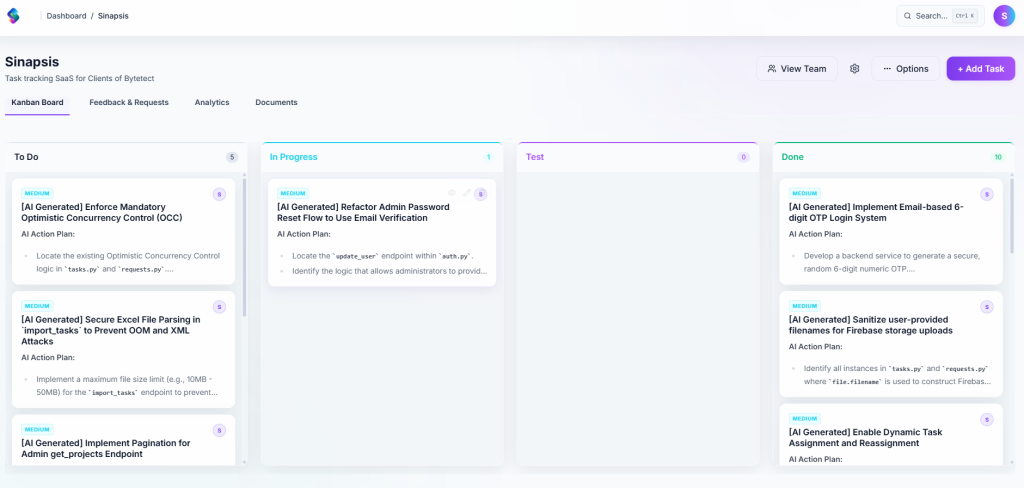
- Interactive Workspaces: We implemented highly performant drag-and-drop interfaces for Kanban boards and sprint planning. This allows clients to easily view roadmaps and understand exactly where their features sit in the pipeline.
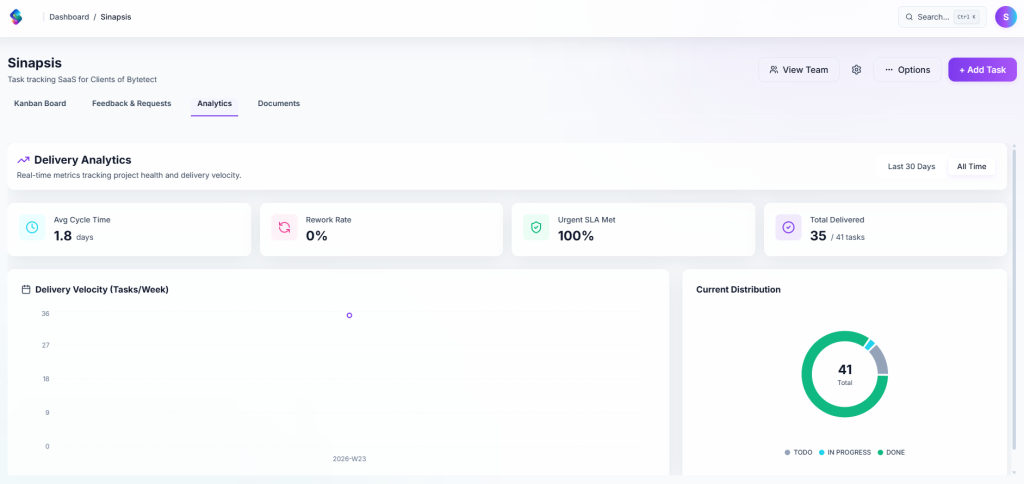
- Data Visualization: Integrated charting tools provide real-time analytics on project velocity. Clients don’t have to wait for a weekly report; they can see real-time progress dashboards.
- Styling: We use Tailwind CSS to maintain a rigorous, scalable design system that supports dark mode natively and delivers a premium, professional aesthetic for client portals.
2. The Backend: Scalable and Transparent
The engine driving Sinapsis is a high-throughput backend written in Python using FastAPI.
- Global Search Engine: To make navigating projects effortless for both technical and non-technical users, we integrated Elasticsearch. Clients can instantly search for feature requests, updates, or specific feedback in milliseconds.
- GitHub Integration: Sinapsis listens to GitHub via native webhooks. When code is committed or a pull request is merged, the project state updates automatically. This means clients see tangible progress tied directly to the codebase, without engineers needing to manually update tickets.
3. The AI Layer: Decision-Grade Intelligence
By leveraging the same principles we use in our Nexus Multi-Agent System, the AI in Sinapsis acts as a context-aware bridge between highly technical engineering work and client-facing summaries.
- Contextual Summaries: The AI can synthesize complex pull requests, architectural decisions, and technical discussions into plain-language summaries, ensuring clients always understand the “why” behind the engineering work.
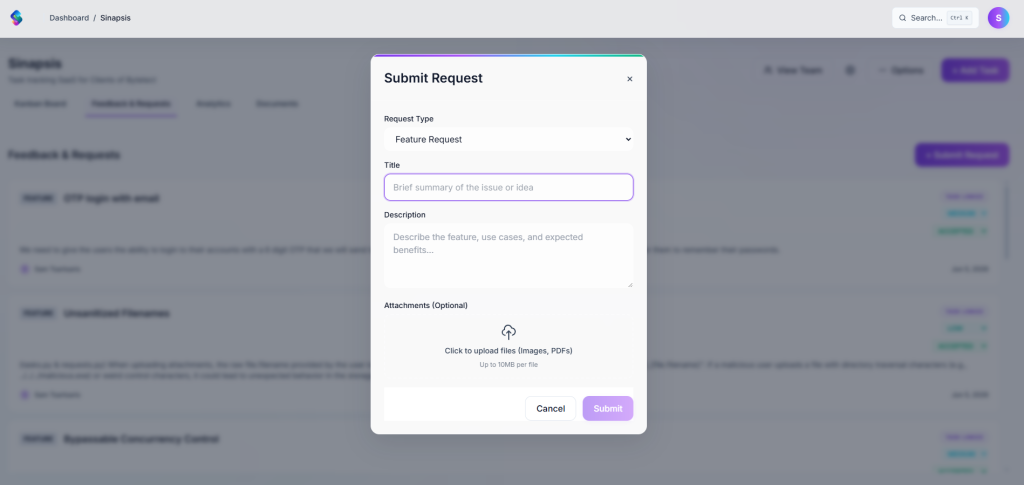
- Automated Triage: The AI intelligently routes client feedback and feature requests directly to the correct engineering context, ensuring nothing gets lost in translation.
Deployment and Infrastructure
True to ByteTect’s philosophy, the infrastructure is designed for resilience and scale. The frontend is delivered via Firebase Hosting for global CDN edge caching. The backend services are containerized using Docker, allowing for flexible deployments across environments. Rate limiting and CORS configurations ensure the platform remains secure, protecting sensitive client data.
What’s Next?
Sinapsis is currently rolling out to our clients. Over the coming months, we will be expanding its AI capabilities and introducing more advanced data visualization features to further enhance client transparency.
We believe that by building tools that connect clients directly to the development lifecycle, we build better software, faster, and with greater alignment. Stay tuned to the ByteTect Labs blog as we share more technical insights from the development of Sinapsis.
Let’s build something together.
Book a free 30-minute consultation, we’ll discuss your challenges and outline a concrete solution.